

Baby Tooth Crown or Filling? What Determines the Choice
Hearing that your child needs dental treatment can bring up questions, especially when the recommendation is different from what you expected. Why would one cavity need a filling while another needs a crown? And does a baby tooth really need that much attention when it will eventually fall out?
The choice between a baby tooth crown or filling starts with an examination. Your dentist considers how much healthy tooth remains, where the decay is located, the health of the tissue inside the tooth, and how long the tooth is expected to stay in place.
At Premier Craft Dental Care in Arlington, TX, we offer children’s tooth-colored fillings and stainless steel crowns. We explain the recommendation so you can understand what your child’s tooth needs and ask questions before moving forward.
Why Baby Teeth Still Need Care
Baby teeth help children chew and speak, and they hold space for the permanent teeth developing underneath. Some remain in place for years after the front baby teeth begin to loosen.
That makes “it will fall out anyway” an incomplete answer to a cavity. The timing of natural tooth loss matters, but so does the tooth’s current condition. A tooth with significant decay may need attention well before it is ready to fall out.
The goal is to recommend appropriate care for the tooth’s remaining role. That may mean a filling, a crown, preventive treatment, or another approach after evaluation.
What Is the Difference Between a Filling and a Crown?
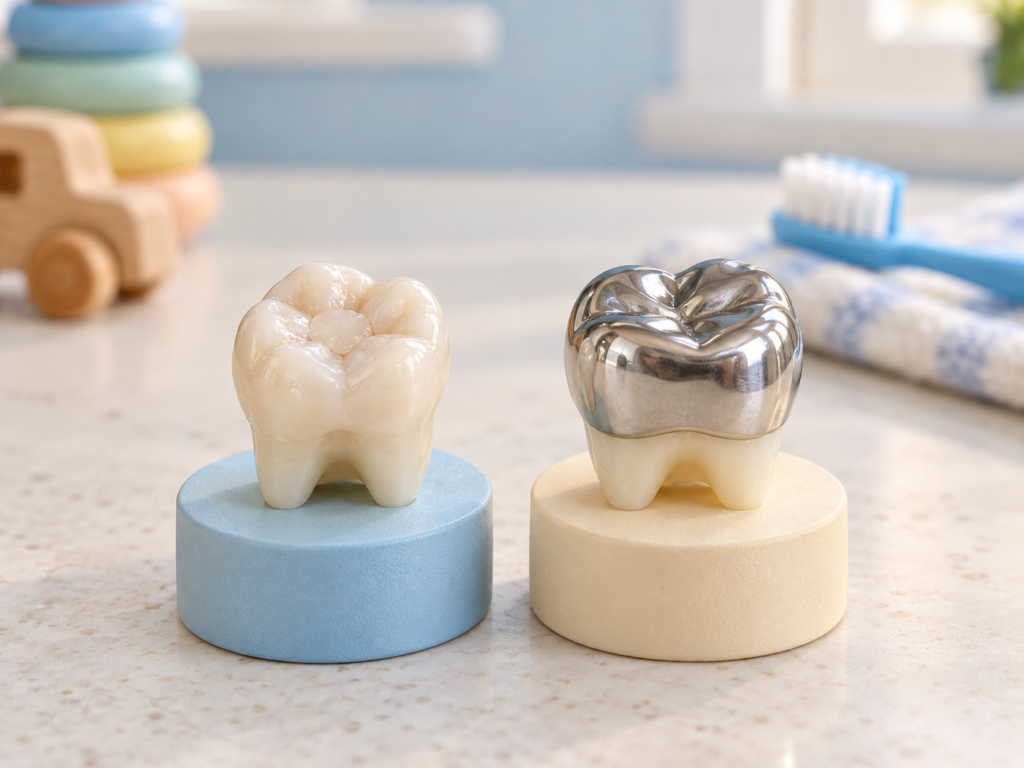
A filling repairs the affected part of a tooth using restorative material. For children, a tooth-colored composite filling may be appropriate when enough healthy structure remains to support the repair.
Our tooth-colored fillings blend with the tooth’s appearance. However, appearance is only one consideration. The dentist also evaluates whether a filling can adequately restore the affected area.
A crown covers more of the tooth’s outer surface. Stainless steel crowns for children are prefabricated caps that the dentist selects and adapts to fit the tooth. They are commonly used on baby molars that need broader coverage.
A crown recommendation does not automatically mean the tooth cannot be saved. It may mean that a filling would leave too little support for the repair.
What Determines the Recommendation?
How Much Healthy Tooth Remains
A cavity’s visible opening does not always show the full extent of the damage. Decay can affect the chewing surface, the area between teeth, or several surfaces of the same tooth.
A smaller, limited area of damage may allow a filling. When several surfaces are affected or substantial structure is missing, a crown may provide more suitable coverage.
This is why two teeth with similar-looking spots can receive different recommendations. Ask the dentist to show you the affected areas on an image or explain which parts of the tooth would remain after treatment.
How Deep the Decay Goes
Inside each tooth is the pulp, which contains nerves, blood vessels, and other soft tissue. Its health matters when planning treatment.
If decay is deep, the dentist must consider more than the choice of filling material or crown. The tooth may need additional treatment, or it may not be suitable for restoration. A crown alone does not resolve every problem involving the pulp.
Depending on the findings, your dentist may discuss treatment options or a referral. If your child has tooth pain or swelling, contact the dental office promptly and describe the symptoms when scheduling.
How Long the Tooth Is Expected to Remain
Your child’s age provides context, but it does not determine the answer by itself. Individual teeth develop and fall out at different times.
The dentist considers the specific tooth, its roots, and the development of the permanent tooth beneath it. A baby molar expected to remain for several years has different treatment considerations from a tooth approaching natural loss.
Parents do not need to estimate this timeline themselves. An examination and X-rays, when indicated, help the dentist assess development alongside the tooth’s condition.
Your Child’s Cavity Risk
Repairing one tooth does not remove the factors that contributed to decay. Previous cavities, eating and drinking habits, fluoride exposure, and daily cleaning can all help shape a prevention plan.
The dentist may recommend changes at home, professional fluoride, sealants on suitable teeth, or a different follow-up schedule. These recommendations support the restoration and the rest of your child’s smile.
A higher cavity risk is a reason to plan carefully. It does not mean every tooth automatically needs a crown.
Conditions for Placing the Restoration
Composite fillings require appropriate moisture control during placement. The dentist considers whether the tooth can be kept sufficiently dry and which restoration suits the clinical situation.
Your child’s comfort and ability to participate also matter when planning the appointment. Share concerns about unfamiliar sounds, previous experiences, or difficulty keeping their mouth open.
These conversations help the team plan care. A crown should not be explained simply as something chosen because a child is nervous or has trouble sitting still.
How Different Teeth Can Need Different Treatments
Consider two hypothetical baby molars. One has a limited cavity and enough healthy structure to support a filling. Another has decay across several surfaces and needs broader coverage. Different recommendations can make sense even when both teeth belong to the same child.
| Finding | What it may mean for treatment |
| Limited damage with adequate healthy structure | A filling may be suitable. |
| Extensive damage involving several surfaces | A crown may be considered. |
| Deep decay or concerns about pulp health | Additional evaluation or treatment may be needed. |
| A tooth nearing natural loss | Development and symptoms help guide the plan. |
These examples explain the reasoning; they cannot determine your child’s treatment without an examination.
What to Expect at the Evaluation
The visit starts with your child’s history and an examination. Tell the team about discomfort, sensitivity, changes in eating, or anything you have noticed around the tooth. Bring up questions even if your child has not complained.
X-rays may be recommended when they will help assess decay or development. The dentist can then explain the findings, whether the tooth is restorable, and why a particular option is recommended.
Before treatment, you can ask about appointment steps, comfort measures, aftercare, and expected costs. Our approach emphasizes clear communication and personalized care, whether your child needs one repair or a broader treatment plan.
Questions Worth Asking Before Treatment
You do not need dental terminology to participate in the decision. Useful questions include:
- What makes a filling or crown appropriate for this tooth?
- Is there any concern about the tissue inside the tooth?
- What alternatives are reasonable, and what happens if treatment is delayed?
- What should we expect during and after the appointment?
- How can we reduce the risk of more cavities?
If an explanation feels unclear, ask the team to walk through it again. Understanding the recommendation can make it easier to prepare your child and follow the care instructions.
Keep Prevention Part of the Plan
Continue helping your child brush twice daily with an age-appropriate amount of fluoride toothpaste. Clean between teeth that touch, and ask for guidance if flossing is difficult.
Discuss frequent sugary snacks or drinks with the dental team, and keep recommended follow-up visits. A filling or crown repairs a particular tooth; daily habits and preventive care remain important afterward.
Frequently Asked Questions
Does Every Cavity in a Baby Tooth Need a Filling?
No. Some early areas of decay may be managed with preventive treatment and professional monitoring. A cavity with more advanced damage may need restoration. The dentist determines the approach; lack of pain is not a reason to assume treatment can wait.
When Does a Baby Tooth Need a Crown Instead of a Filling?
A crown may be considered when extensive damage leaves insufficient support for a filling or when broader coverage is appropriate. The tooth’s pulp health, development, and other clinical findings also influence the recommendation.
Why Treat a Baby Tooth if It Will Eventually Fall Out?
Baby teeth support eating, speech, and space for developing permanent teeth. Treatment decisions consider both the tooth’s condition and how long it is expected to remain.
Can a Child Have Fillings and Crowns on Different Baby Teeth?
Yes. Each tooth is evaluated individually. One may be suitable for a filling while another needs a crown or a different treatment approach.
Talk Through Your Child’s Options
Schedule an appointment with Premier Craft Dental Care in Arlington, TX, to have your child’s tooth evaluated and discuss the recommended care.
Choosing a baby tooth crown or filling is a decision about the specific tooth. With a clear explanation of the findings and a plan for prevention, you can move forward with a better understanding of your child’s dental care.