

When Is Bone Grafting Part of Dental Implant Planning?
A dentist may recommend a bone graft when there isn’t enough bone where a dental implant needs to go. If the bone can support an implant in the planned position, a graft may not be needed. If the area needs more support, the dentist may recommend grafting before placing the implant or, in some cases, during the same procedure.
Bone grafting for dental implants starts with a question: What support does the implant need at this specific spot? The answer can vary even between two missing teeth in the same mouth. Here’s what the dentist checks and how those findings can affect the order of treatment.
What Does the Dentist Check Before Recommending a Graft?
The dentist starts by looking at the area where the replacement tooth needs to sit and the bone available to hold the implant underneath it. A ridge of bone can look wide enough in one view but be too narrow in another. The dentist checks the width and height at the proposed implant site, along with the health of the gums and nearby teeth.
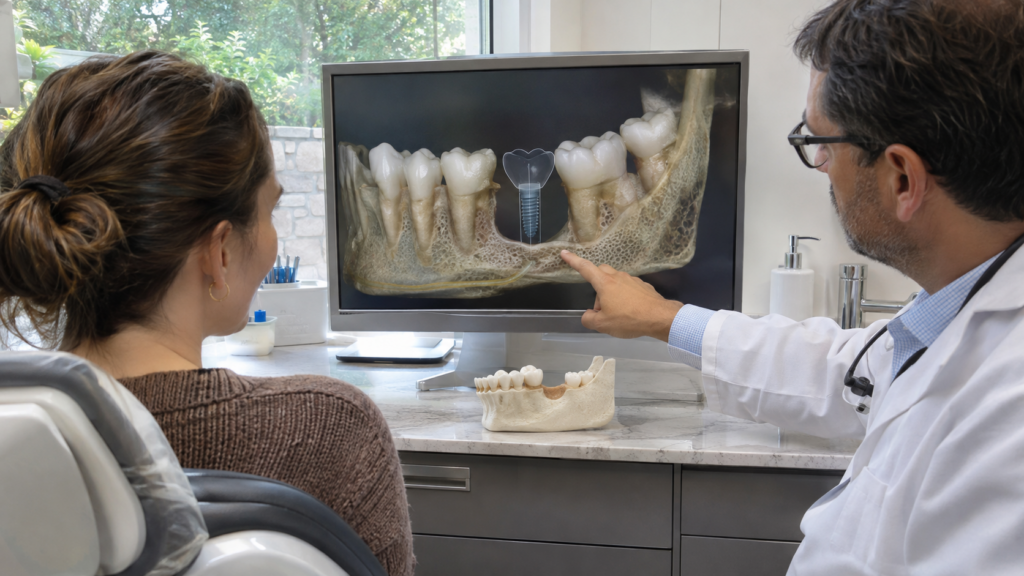
At Premier Craft Dental Care, 3D cone beam imaging, also called CBCT, supports implant planning. It can show the shape and dimensions of the bone and help the dentist see how the proposed implant site relates to nearby structures, such as a nerve or sinus. The scan is one part of the evaluation. The exam and your medical and dental history also help guide the recommendation.
The bone around a missing tooth changes shape as it heals after an extraction. Previous gum disease, infection, or an injury can also affect the amount of bone available. Tell the dentist when the tooth was removed and whether you’ve had an infection, gum treatment, or a graft in that area. If it’s been years since you lost the tooth, you can still ask about your options. The current condition of the site matters more than the date alone.
The shape of the ridge is only part of the picture. For example, there may be enough bone in one area of the jaw but less room at the exact spot needed to support the replacement tooth. Ask the dentist to show you what they’re measuring and how it affects where the implant can go.
The Three Ways Bone Support Can Shape Your Implant Plan
| What the dentist finds | What the plan may involve |
| Enough bone to hold the implant in the planned position | Implant placement without a graft. |
| Enough existing bone to hold the implant steady, with a smaller area that needs added support | A graft during implant placement, if appropriate. |
| Too little bone to place and stabilize the implant as planned | A graft first, followed by healing and a reassessment before implant placement. |
1. You May Be Able to Move Ahead Without a Graft
If the implant site has enough healthy bone, the dentist may recommend proceeding without a graft. There may still be other things to address before placement, such as active gum disease. Ask what the exam showed and which steps you’ll need before the implant can be placed.
2. A Smaller Graft May Be Done With Implant Placement
In some cases, the bone that’s already there can hold the implant steady from the start, but a small area around it needs added support. The dentist may be able to place the graft and implant during the same procedure. Whether that makes sense depends on the site and the size and location of the area that needs grafting.
Having both procedures together doesn’t mean the final crown goes on that day. After placement, the implant may need time for bone to attach to its surface before it can support the final restoration. Ask whether the proposed schedule is for placing the implant or for completing the replacement tooth.
3. A Graft May Need to Heal Before Implant Placement
If the bone is too narrow, too short, or otherwise unable to support the implant as planned, the dentist may recommend bone grafting first. The graft material supports new bone formation where more bone is needed. The site may need several months to heal, and the dentist will reassess it before deciding whether and when to place the implant.
In this plan, there are two separate healing periods to discuss: healing after the graft, then healing after implant placement. Ask how the dentist will check the site, what could change the timing, and when to expect a more specific estimate. A graft may make implant treatment possible, but the dentist still needs to confirm that the site is ready. If grafting or implant placement isn’t suitable, ask what other tooth replacement options are available.
How Does Socket Preservation Fit In?
Socket preservation is a type of grafting done when a tooth is removed. The dentist places graft material in the empty socket to help limit how much the ridge changes in width and height as it heals. The aim is to maintain more of the bone already there for possible future tooth replacement.
If the tooth is already missing and the ridge has become too narrow for an implant, the discussion may instead be about rebuilding bone at that healed site. If you have an extraction coming up and are considering an implant later, ask about socket preservation before the extraction. If you’ve already had it, tell the dentist at your implant visit. The area can still change after socket preservation, so the dentist will check whether additional grafting is needed.
What Should You Ask at Your Implant Consultation?
Ask the dentist to show you the proposed implant site on the scan and explain what they see. Seeing where the implant would sit can make it easier to understand why a graft might be recommended. Bring a list of medications and any records from earlier care if you have them.
These questions can help you compare your options and plan ahead:
- What needs more support? Ask whether the issue is bone width, height, or another finding and how it affects the implant.
- Will the graft add a separate procedure? Ask which appointments are for grafting, implant placement, and the final crown or other restoration.
- What can I use while I’m waiting? If the missing tooth is visible, ask whether a temporary tooth is suitable and when you could wear it.
- What alternatives can I consider? Ask what changes if you decide against grafting or prefer another way to replace the tooth.
If your plan includes a referral, ask which office will handle each step and who will check that the graft is ready before implant placement. It can help to write down the order of visits before you leave the consultation.
Common Questions About Bone Grafting
Does graft material always come from my own bone?
No. Options can include your own bone, processed donor material, animal-derived material, or synthetic material. Ask what material is recommended for you and why. If you have a preference about the source, bring it up before you agree to treatment. You can also ask about the benefits and risks of the material and whether there are other suitable choices.
Can I tell if a graft has healed by how the area feels?
Feeling better is a welcome change, but it doesn’t show whether the bone can support the planned implant. The dentist will check the site and may use imaging when appropriate to decide whether you’re ready for the next step. Keep the follow-up even if the area feels comfortable.
Talk Through Your Implant Plan in Arlington
If you’re considering a dental implant or have been told you may need a graft, contact the dental team at Premier Craft Dental Care in Arlington, Texas. Ask what the evaluation can show about your bone support and how that could affect the order of treatment.